
Managing money is not just about earning, saving or investing. It also involves deciding how your money can help you meet your current needs and future goals. This is where financial
But what is financial planning, and how can you create a financial plan? In simple terms, financial planning is the process of assessing your financial situation, setting goals and creating a strategy for managing your income, expenses, savings, investments, insurance and debt.
planning becomes important.
What Is Financial Planning and How Does It Work?
Financial planning is a structured approach to managing your finances to achieve specific short-term and long-term goals. It starts with understanding your current financial position and then creating a plan based on your income, expenses, financial
For example, if you want to buy a house in five years, you may need to determine how much you need to save, manage
Financial planning is therefore broader than investment planning. Investments are one component of an overall financial plan.
your existing debt, build an emergency fund and choose suitable investment options.
obligations, risk profile and future requirements.
Why Is Financial Planning Important?
A financial plan can help you manage money systematically instead of making financial decisions based only on immediate needs.
Some important benefits
Helps set financial goals: You can define goals such as buying a home, funding education or preparing for retirement.
Supports budgeting: Tracking income and expenses can help you understand where your money goes.
Prepares for emergencies: An emergency fund can provide a financial cushion for unexpected expenses.
Helps manage debt: Planning can help you account for loan EMIs and other liabilities while working towards other goals.
Supports investment decisions: Your investment choices can be aligned with your goals, time horizon and risk tolerance.
Helps prepare for retirement: Starting retirement planning early can give you more time to build your retirement corpus.
Provides financial direction: Regularly reviewing your finances can help you adjust your plan when your circumstances change.
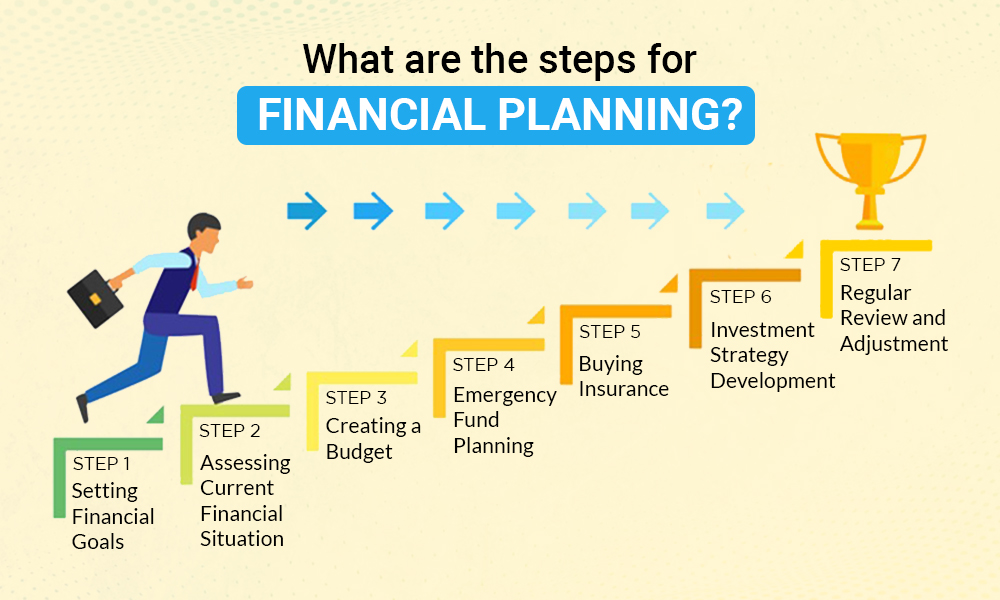
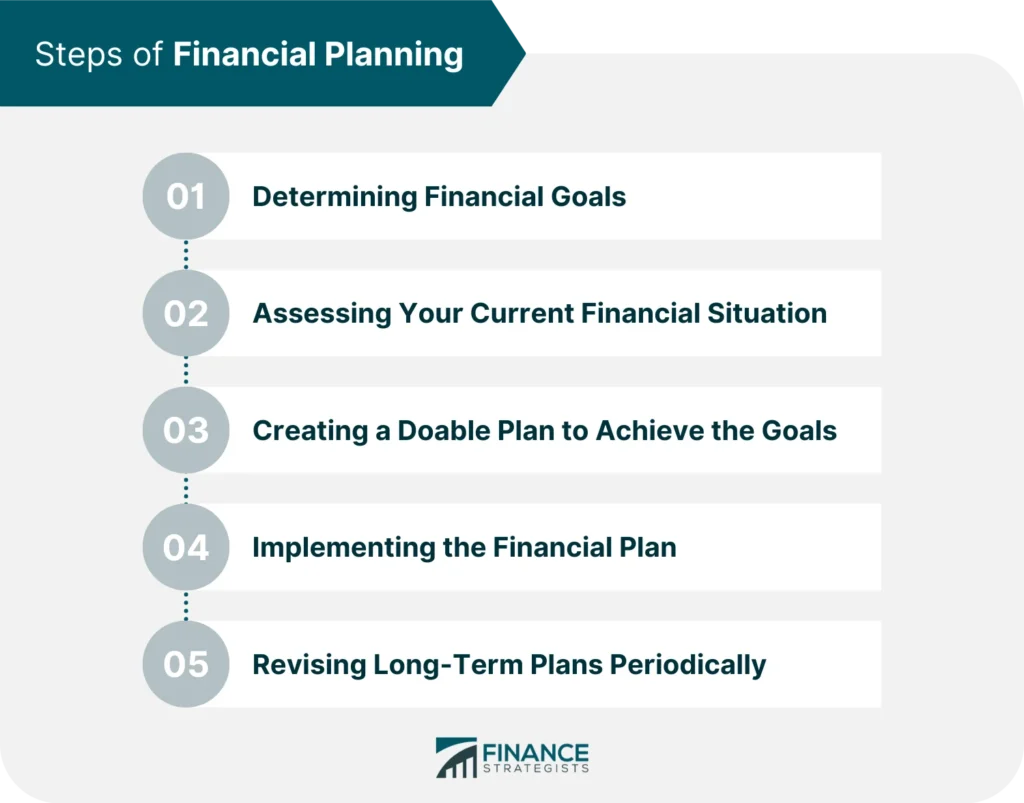
How to Do Financial Planning: 5 Simple Steps
Creating a financial plan does not have to be complicated. You can start with these steps.
1. Set Your Financial Goals
Begin by identifying what you want your money to achieve. Divide your goals into short-, medium- and long-term goals.
For example, an emergency fund may be a short-term priority, while buying a home or planning for retirement may be a long-term goal.
Be specific about the amount required and the expected timeframe.
2. Assess Your Income and Expenses
Calculate your regular income and track your expenses. Separate essential expenses such as rent, food and utilities from discretionary spending.
This helps you determine how much money may be available for savings, investments and debt repayment.
3. Build an Emergency Fund and Manage Debt
An emergency fund can help cover unexpected expenses without requiring you to rely on high-cost borrowing.
At the same time, account for outstanding loans and credit-card balances in your financial plan. Consider your interest costs, repayment obligations and overall cash flow when deciding how to balance debt repayment with other financial goals.
4. Invest According to Your Goals and Risk
Once your basic financial requirements are addressed, consider investments based on your goals, investment horizon and risk tolerance.
A goal that is several years away may require a different approach from a goal that is due shortly. Diversification and periodic review can also form part of an investment strategy.
Investment decisions should be based on your individual circumstances, and market-linked investments carry risks.
5. Review Your Financial Plan Regularly
Financial planning is not a one-time activity. Your income, expenses, responsibilities and goals can change over time.
Review your plan periodically and consider updating it after significant events such as a change in employment, marriage, childbirth, purchase of a home or major change in income.
How to Calculate Your Net Worth for Financial Planning
Knowing your net worth can help you understand your current financial position.
The basic formula is:
Net Worth = Total Assets − Total Liabilities
Assets may include bank balances, investments and other assets, while liabilities can include outstanding loans and credit-card dues.
For example, if your total assets are ₹15 lakh and your outstanding liabilities are ₹5 lakh, your net worth is ₹10 lakh.
Tracking this figure periodically can help you see how your financial position changes over time.
How Does Inflation Affect Financial Planning?
Inflation is an important consideration when planning for future expenses.
For example, if an education goal costs ₹5 lakh today, the amount required in the future may be higher because prices can increase over time. Therefore, long-term financial goals should account for the potential impact of inflation.
This is one reason why simply saving today’s estimated cost may not always be sufficient for a future goal.
Financial Planning Example for a Salaried Person
Suppose a person earns ₹60,000 per month and wants to build financial stability while saving for long-term goals.
A simple financial plan could involve:
Allocating money towards essential monthly expenses
Maintaining an emergency fund
Repaying high-cost debt
Maintaining appropriate insurance protection
Setting aside money for short-term goals
Investing towards long-term goals
Reviewing the plan periodically
The exact allocation will depend on the person’s expenses, liabilities, financial goals, risk tolerance and other circumstances. The figures should therefore be treated as illustrative rather than a universal formula
Common Financial Planning Mistakes to Avoid
Some common mistakes can make it harder to achieve financial goals:
Investing without defining goals
Ignoring emergency savings
Taking on excessive debt
Ignoring the effect of inflation
Choosing investments without considering risk
Not having adequate financial protection
Failing to review the financial plan organising your income, expenses, savings, investments, insurance and debt to help you achieve your short-
Making decisions based solely on short-term market movements
A well-structured financial plan should evolve as your financial circumstances and goals change.

What is financial planning in simple words?
Why is financial planning important?
What are financial goals, assessing your financial position, managing expenses and debt, building financial reserves, investing according to your the main types of financial planning?
What are the steps of financial planning?
Conclusion
Financial planning is a continuous process of understanding where you stand financially, deciding where you want to go and creating a structured approach to get there. It brings together budgeting, saving, investing, insurance, debt management and goal planning.
Starting with clear goals, understanding your cash flow, building financial reserves and reviewing your plan regularly can help you make more informed financial decisions over time.